Festival Calendar
Seasonal closures, processions and feast days that change visiting hours across the country.
Dress code, water and heat management, photography rules, the difference between Cairo and Upper Egypt taxi pricing, common-sense personal safety and the things you can leave at home. The page is written for first-time visitors and for returning travellers who have not been to Egypt in the last two years.
Egypt is a Muslim-majority country with a strong civic culture around dress at religious and heritage sites. Outside swimming-pool environments and the Red Sea resorts, visitors are expected to dress modestly. For visits to mosques, churches and the inside of any place of worship, shoulders and knees must be covered for all visitors and head covering is required for women inside mosques. Linen or light cotton works in summer; longer sleeves are the comfortable choice at archaeological sites where there is no shade.
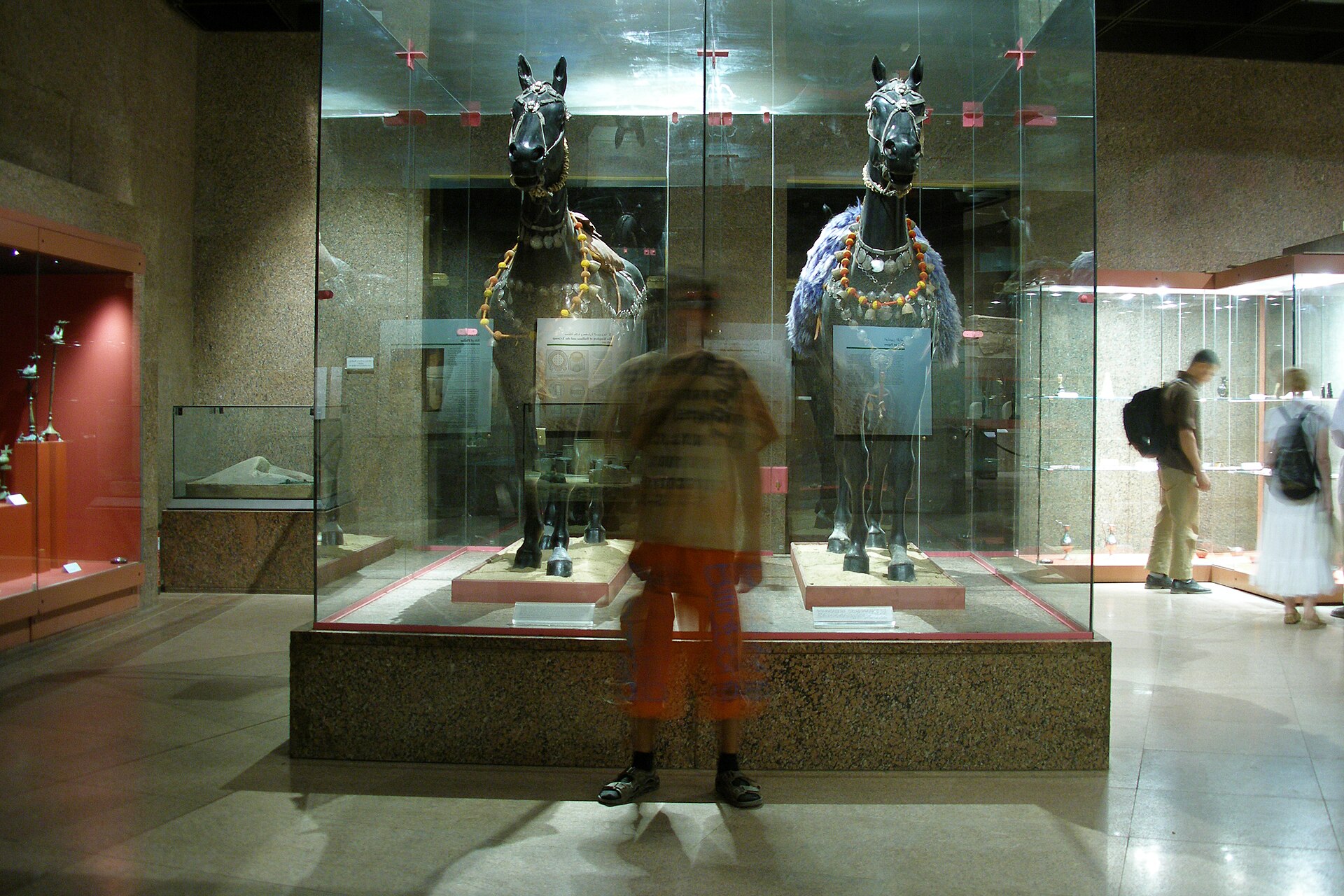
For museum visits, ordinary smart-casual clothing is fine. Shorts and short skirts at major museums attract no problem. For excursions to the Pyramids, sturdy walking shoes are necessary — the surface is sand and broken stone, not paved. A wide-brimmed hat is a serious item rather than a fashion choice; the sun on the Giza Plateau between 10:00 and 15:00 in summer is genuinely dangerous. A small backpack with a water bottle is the practical baseline; we recommend a one-litre minimum and refilling at the museum café rather than buying small bottles from kiosks.
The Egyptian heritage calendar is shaped by heat. Upper Egypt in July and August reaches forty-five degrees Celsius without exaggeration; Aswan often exceeds this in the early afternoon. Visit archaeological sites in Upper Egypt at opening time (06:00–07:00 in summer) and treat the period between 11:00 and 16:00 as siesta time — return to the hotel, eat lunch, sleep, then re-emerge for the late-afternoon golden hour. Cruise itineraries that put visitors on Karnak at 14:00 in July are doing them no favours.
Drink more water than you think you need. The dry desert air dehydrates faster than the felt temperature suggests because sweat evaporates almost as it forms. A litre and a half during a morning at Karnak is the realistic baseline. Salty snacks help to retain water. Caffeine and alcohol do not. If you feel a headache, a metallic taste or unusual fatigue, stop walking and find shade immediately — those are early signs of heat exhaustion and the conservative response is the correct one.
In cool months — November through February — the temperature pattern is reversed. Mornings can be cold in Upper Egypt (10–12°C at sunrise) and the inside of museum galleries that are not climate-controlled feels noticeably chilly. Bring a lightweight long-sleeve layer for those mornings.
Most Egyptian heritage sites permit photography for personal use at no extra cost. Some museums charge a small photography supplement — typically around 50 EGP for handheld cameras. Tripods, professional rigs and any apparatus that requires a permit are subject to a separate charge and sometimes a written permit obtained in advance from the Ministry of Tourism and Antiquities. Filming inside the Royal Mummies hall at the Egyptian Museum on Tahrir Square is not permitted under any circumstances.
Photography inside churches and mosques requires sensitivity: ask before pointing a camera at any worshipper, do not use flash inside the Hanging Church or Saint Catherine’s Monastery, and refrain from photography during prayer times. The Mosque of Muhammad Ali inside the Citadel of Saladin permits photography of the architecture but not of worshippers.
Almost all archaeological and museum tickets are now sold electronically at the gate. Credit and debit cards are accepted at the major sites — the Grand Egyptian Museum, the Egyptian Museum on Tahrir Square, Karnak, Luxor Temple, the Valley of the Kings, Abu Simbel — but smaller museums in regional towns still expect cash in Egyptian Pounds. Carry a mix of cash and card.
ATMs are reliable in Cairo, Alexandria, Luxor and Aswan. They become noticeably rarer once you leave those four cities. The maximum withdrawal per transaction at most ATMs is 4,000–6,000 EGP and the daily cap depends on your home bank. Foreign card fees on top of the Egyptian withdrawal fee can be significant; check your bank’s policy before relying on ATMs as your only source of cash.
Tipping in Egypt is a small but constant social presence. Café staff, hotel housekeeping, taxi drivers who help with bags, the warden at the gate of a tomb who points out a detail — all expect a modest tip. Twenty Egyptian Pounds is a serviceable baseline for small services; cumulate fifty for a guided tomb explanation and a hundred for a private guided tour. The English word “baksheesh” is used everywhere.
Cairo has a metro system that is fast, cheap and surprisingly underused by international visitors. Two of the three lines serve the heritage areas of central Cairo — Tahrir for the Egyptian Museum, Mar Girgis for Coptic Cairo, Attaba for Khan el-Khalili. The metro is air-conditioned and avoids the surface traffic that makes Cairo taxi journeys unpredictable. A single trip costs less than a dollar.
Taxis in Cairo use meters on paper but in practice agree a fare before the ride. Uber and Careem work well across the city and remove most of the negotiation difficulty. Outside Cairo, ride-hailing applications are unreliable; engage a private driver through your hotel for half-day or full-day work. Expect to pay around 800–1,500 EGP for a half-day private driver in Luxor and Aswan; full-day rates are roughly double. Cruise-ship transfers are usually arranged in advance and are not negotiable on site.
Between cities, the Cairo–Alexandria rail line and the Cairo–Luxor–Aswan sleeper trains are practical alternatives to internal flights. Domestic flights are common, generally on time, and operated by EgyptAir; book through the airline directly rather than third-party aggregators.
Seasonal closures, processions and feast days that change visiting hours across the country.
The same essentials but applied to family travel — age pacing, snack and shade logistics, what to skip.
Regional briefings with the pacing strategy that fits the essentials above.